Mantas & Mobulas
(Mobulidae)
Mantas and Mobulas: The Graceful Giants of the Sea
Manta rays and mobulas, members of the Mobulidae family, are among the most captivating creatures in the marine world. Known for their elegance and intelligence, these filter-feeding rays are found in tropical and temperate oceans worldwide, where they play a vital role in the marine ecosystem.
Understanding Mantas and Mobulas
Manta rays are divided into two species: the reef manta (Mobula alfredi), which tends to inhabit coastal regions, and the giant oceanic manta (Mobula birostris), which roams the open ocean. Mobulas, often called devil rays, are smaller relatives with a similar body shape and feeding behavior, frequently seen traveling in schools.
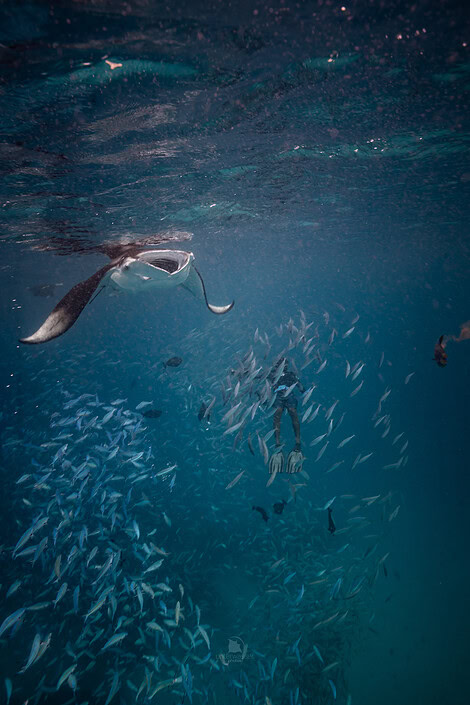
Both mantas and mobulas are filter feeders, consuming plankton and small fish. Using their cephalic fins, they channel water into their mouths while swimming, making their feeding behavior a fascinating spectacle.
Diving with Mantas and Mobulas
Observing these rays underwater offers a unique insight into their behavior. Mantas are often found at cleaning stations, where smaller fish, such as wrasses, remove parasites from their skin. This mutualistic relationship provides an excellent opportunity to study their social interactions and body language.
Mobulas, on the other hand, are known for their schooling behavior and acrobatics. Large gatherings, especially during feeding or mating seasons, are a marvel of coordination and collective movement, making them a focus of marine research and observation.
Photographing Mantas and Mobulas
Photographing mantas and mobulas offers a chance to document their behavior and beauty. Their distinctive patterns, unique to each individual, provide a non-invasive way to identify and monitor populations. Wide-angle lenses are essential to capture their full wingspan, while natural light or careful strobe use highlights their intricate markings without causing disturbance.
Conservation and Awareness
Mantas and mobulas face numerous threats, including overfishing, bycatch, and habitat loss. Due to their slow reproductive rates, these rays are particularly vulnerable to population declines. Organizations like Manta Trust play a vital role in researching and protecting these species through scientific studies, education, and conservation initiatives.
By observing and documenting mantas and mobulas responsibly, divers and photographers contribute valuable data that can support global conservation efforts. Supporting organizations like Manta Trust helps raise awareness and drive action to ensure these magnificent creatures continue to thrive in our oceans.
 unterwasser.photos


